

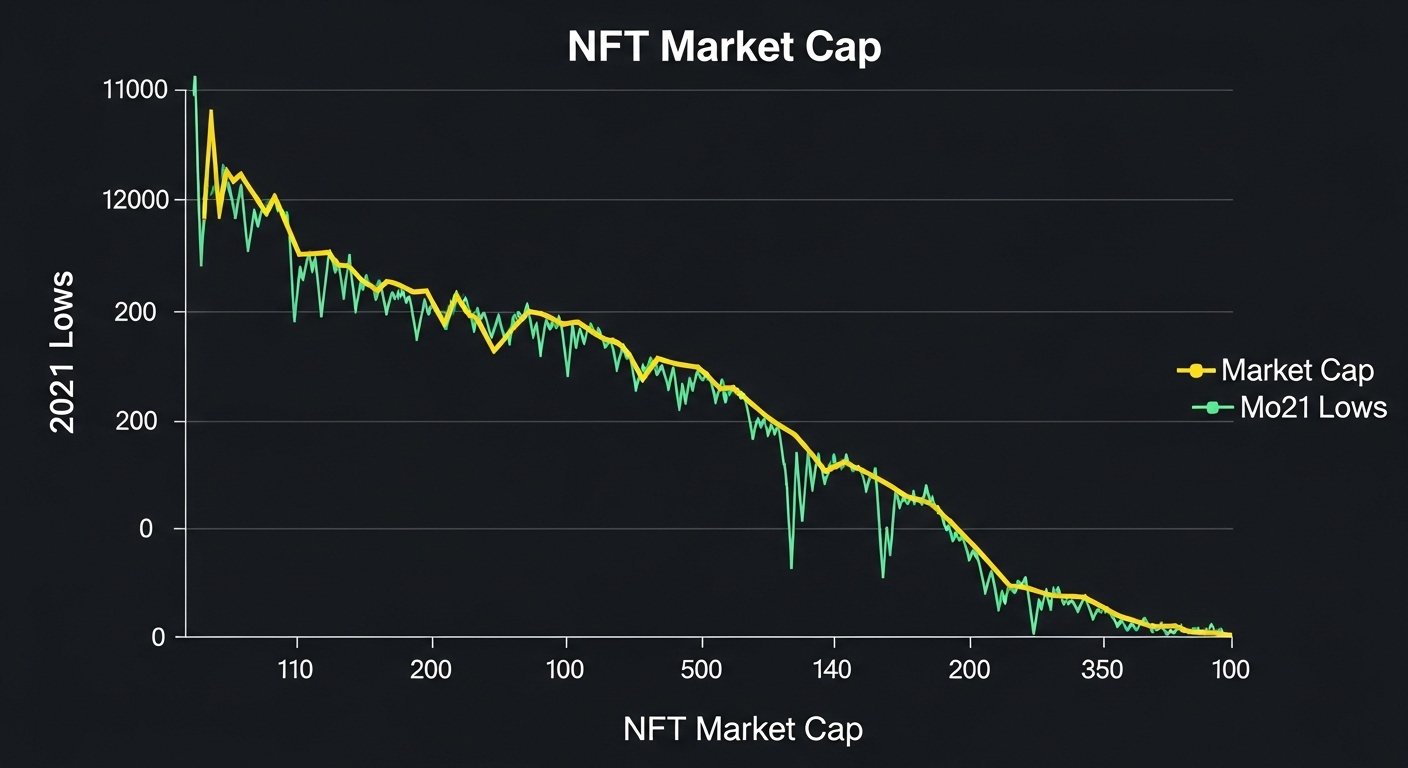
NFT Market Cap Hits 2021 Lows as DeepSnitch AI Rises the NFT market cap has entered a challenging phase, returning to levels not seen since the early days of the 2021 boom. What was once a multi-billion-dollar industry fueled by celebrity endorsements, digital art sales, and speculative enthusiasm has now cooled significantly. This shift reflects broader changes across the crypto market, including reduced trading volumes, tighter liquidity, and evolving investor priorities. As enthusiasm around traditional non-fungible tokens declines, new narratives are emerging that attempt to capture the attention of investors searching for the next breakout opportunity.
Among these emerging narratives, the combination of artificial intelligence and blockchain technology has started to gain traction. The latest example is DeepSnitch AI, a project that positions itself at the intersection of AI-powered crypto, blockchain analytics, and next-generation token utilities. While the NFT sector struggles to regain its former glory, the DeepSnitch AI presale has attracted attention from traders and early adopters who believe that new technologies could reshape the digital asset landscape.
The contrast between the shrinking NFT market cap and the rising interest in AI-based tokens illustrates a broader transformation within the crypto ecosystem. Instead of focusing solely on collectibles, investors are increasingly looking toward projects that offer practical use cases, real-world integrations, and advanced data capabilities.
NFT Market Cap Hits 2021 Lows as DeepSnitch AI
The decline in the NFT market cap marks a significant turning point for the digital collectibles industry. At its peak, the sector was valued in the tens of billions of dollars, driven by massive sales of digital art, virtual land, and profile-picture collections. However, as speculative hype faded and market conditions tightened, the sector began to lose momentum.
One of the key factors behind the decline is the reduction in NFT trading volume. Many major marketplaces have reported sharp drops in daily transactions compared to the peak years of 2021 and 2022. Without strong demand from collectors and investors, prices for many once-popular collections have fallen dramatically.
Another major influence is the broader crypto bear market cycles. As cryptocurrency prices fluctuate, investor sentiment shifts. When major coins experience volatility or downward trends, capital often flows out of high-risk assets such as NFTs. This pattern has repeated several times, contributing to the current low levels in the overall NFT ecosystem.
Changing Investor Sentiment in the NFT Space
Investor sentiment plays a crucial role in the performance of any digital asset sector, and the NFT market cap is no exception. During the early boom, the industry attracted a wave of new participants, including celebrities, influencers, and traditional investors. However, as prices cooled and quick profits became less common, many of these participants exited the market.
Today’s investors are more cautious and selective. Instead of chasing hype, they are focusing on projects with strong fundamentals and clear utility. This shift has forced NFT projects to rethink their strategies, moving away from simple collectibles toward utility-driven NFTs, tokenized assets, and real-world integrations.
The transition reflects a maturation of the industry. While speculative projects struggle, those offering tangible value are more likely to survive and grow. As a result, the NFT market cap now reflects a more realistic valuation of the sector rather than the inflated figures seen during the hype cycle.
The Rise of AI-Driven Crypto Projects
As the NFT market cap contracts, the spotlight is shifting toward AI-driven crypto projects. Artificial intelligence has become one of the most talked-about technologies across industries, and the crypto sector is no exception. From AI trading bots to blockchain analytics platforms, projects that combine AI with decentralized technologies are gaining momentum.
The appeal of AI-based tokens lies in their potential for real-world applications. Unlike many NFTs that rely primarily on brand appeal or artistic value, AI projects often promise functional tools, predictive analytics, and automation. This practical utility has made them attractive to investors looking for long-term growth opportunities.
The emergence of AI narratives also reflects broader technological trends. As businesses adopt AI for automation, data analysis, and decision-making, the integration of AI into blockchain platforms appears to be a natural progression.
DeepSnitch AI Presale Gains Momentum
Against the backdrop of a declining NFT market cap, the DeepSnitch AI presale has started to attract attention. The project positions itself as a next-generation platform focused on AI-powered blockchain intelligence. By combining machine learning with decentralized networks, DeepSnitch AI aims to provide advanced analytics and insights for crypto users.
Presales have always been a popular entry point for investors seeking early exposure to new tokens. The appeal lies in the possibility of acquiring assets at a lower price before they reach major exchanges. In the case of DeepSnitch AI, the presale has gained traction among traders who are searching for projects aligned with the growing AI crypto narrative.
The excitement around the presale also reflects a broader trend. Investors are increasingly drawn to projects that promise innovation rather than simply replicating existing models. As the NFT market cap declines, attention naturally shifts to sectors that show signs of growth and technological advancement.
Why the NFT Sector Is Struggling
The decline of the NFT market cap is not caused by a single factor. Instead, it is the result of several overlapping challenges that have reshaped the industry.
Market Saturation
One of the primary issues has been oversupply. During the peak of the NFT boom, thousands of collections were launched in a short period. Many of these projects lacked originality or long-term value, leading to market saturation. As supply increased and demand weakened, prices began to drop.
Lack of Utility
Another key issue is the lack of real-world use cases for many NFTs. While digital art and collectibles remain popular, they often rely on speculative value rather than functional utility. As investor priorities shift, projects without clear benefits struggle to maintain interest.
Regulatory Uncertainty
Regulatory concerns have also played a role. Governments and financial authorities around the world are still determining how to classify and regulate NFTs. This uncertainty has made some investors hesitant to participate, contributing to the decline in the overall NFT market cap.
How AI Narratives Are Replacing NFT Hype
The transition from NFT hype to AI narratives represents a significant shift in the crypto landscape. While NFTs were primarily associated with digital art and collectibles, AI projects focus on data, automation, and intelligence.
This shift aligns with broader technological trends. Artificial intelligence is being adopted across industries, from healthcare to finance. As a result, investors see AI-based crypto projects as part of a larger global movement rather than a niche trend.
Projects like DeepSnitch AI aim to capitalize on this momentum. By positioning themselves within the AI crypto ecosystem, they attract attention from both crypto enthusiasts and technology-focused investors.
The Role of Presales in Crypto Market Cycles
Presales have long been a central part of the crypto market. They allow projects to raise capital before launching on public exchanges, while also giving early supporters the chance to secure tokens at discounted rates.
During periods when sectors like NFTs are struggling, presales often become focal points for speculation and investment. Traders looking for the next big opportunity tend to explore early-stage projects, especially those tied to trending technologies such as AI.
The growing interest in the DeepSnitch AI presale reflects this dynamic. As the NFT market cap returns to 2021 lows, investors are searching for narratives that offer growth potential, and AI-focused tokens are emerging as strong contenders.
Can the NFT Market Recover?
Despite the current decline, the NFT market cap may not remain at low levels forever. The industry has shown resilience in the past, and new developments could spark renewed interest.
One possible driver of recovery is the integration of NFTs into gaming, entertainment, and real-world asset tokenization. As more practical applications emerge, the perception of NFTs could shift from speculative collectibles to functional digital assets.
Another factor is technological improvement. Lower transaction fees, faster blockchains, and better user experiences could make NFTs more accessible to mainstream audiences. These changes could help the NFT ecosystem regain momentum over time.
What DeepSnitch AI Represents for the Future
The rise of the DeepSnitch AI presale highlights a broader transformation in the crypto space. Investors are no longer satisfied with hype-driven projects. Instead, they are looking for platforms that offer real innovation and practical use cases.
AI-based tokens represent this new direction. By combining machine learning, blockchain analytics, and decentralized infrastructure, projects like DeepSnitch AI aim to create tools that go beyond speculation.
If the trend continues, the crypto market could shift from a focus on collectibles to a focus on intelligent systems and automation. In that context, the decline of the NFT market cap may simply mark the end of one phase and the beginning of another.
Conclusion
The return of the NFT market cap to 2021 lows signals a major shift in the digital asset landscape. What was once one of the most explosive sectors in crypto is now undergoing a period of correction and transformation. Reduced trading volumes, market saturation, and changing investor priorities have all contributed to the decline.
At the same time, new narratives are emerging. The DeepSnitch AI presale reflects the growing interest in AI-powered blockchain projects. As investors search for the next wave of innovation, AI-based tokens are gaining traction. The contrast between the shrinking NFT sector and the rising AI narrative illustrates the evolving nature of the crypto market. While NFTs may eventually recover through new use cases and technological improvements, the current spotlight is clearly shifting toward projects that combine artificial intelligence with blockchain technology.
FAQs
Q: Why has the NFT market cap returned to 2021 levels?
The NFT market cap has declined due to a combination of reduced trading activity, market saturation, and changing investor sentiment. Many speculative projects launched during the boom period failed to deliver long-term value, leading to falling prices and reduced interest across major marketplaces.
Q: What is driving interest in AI-based crypto projects?
Interest in AI-driven crypto projects is growing because they promise practical applications such as automated trading, blockchain analytics, and predictive insights. Unlike many NFTs, these projects often focus on functional utility, which appeals to investors seeking long-term value.
Q: What makes the DeepSnitch AI presale attractive to investors?
The DeepSnitch AI presale is attracting attention because it combines artificial intelligence with blockchain technology. Investors are drawn to projects aligned with emerging tech trends, especially those that offer potential real-world use cases and early entry opportunities.
Q: Can the NFT market recover in the future?
The NFT market cap could recover if new use cases emerge, particularly in areas such as gaming, entertainment, and tokenized real-world assets. Improved technology and better user experiences may also help attract new participants to the market.
Q: How do presales influence crypto market trends?
Presales play a key role in crypto market cycles by giving investors early access to new tokens. During periods when established sectors like NFTs are struggling, presales—especially those tied to trending narratives like AI—often attract significant attention and investment.
